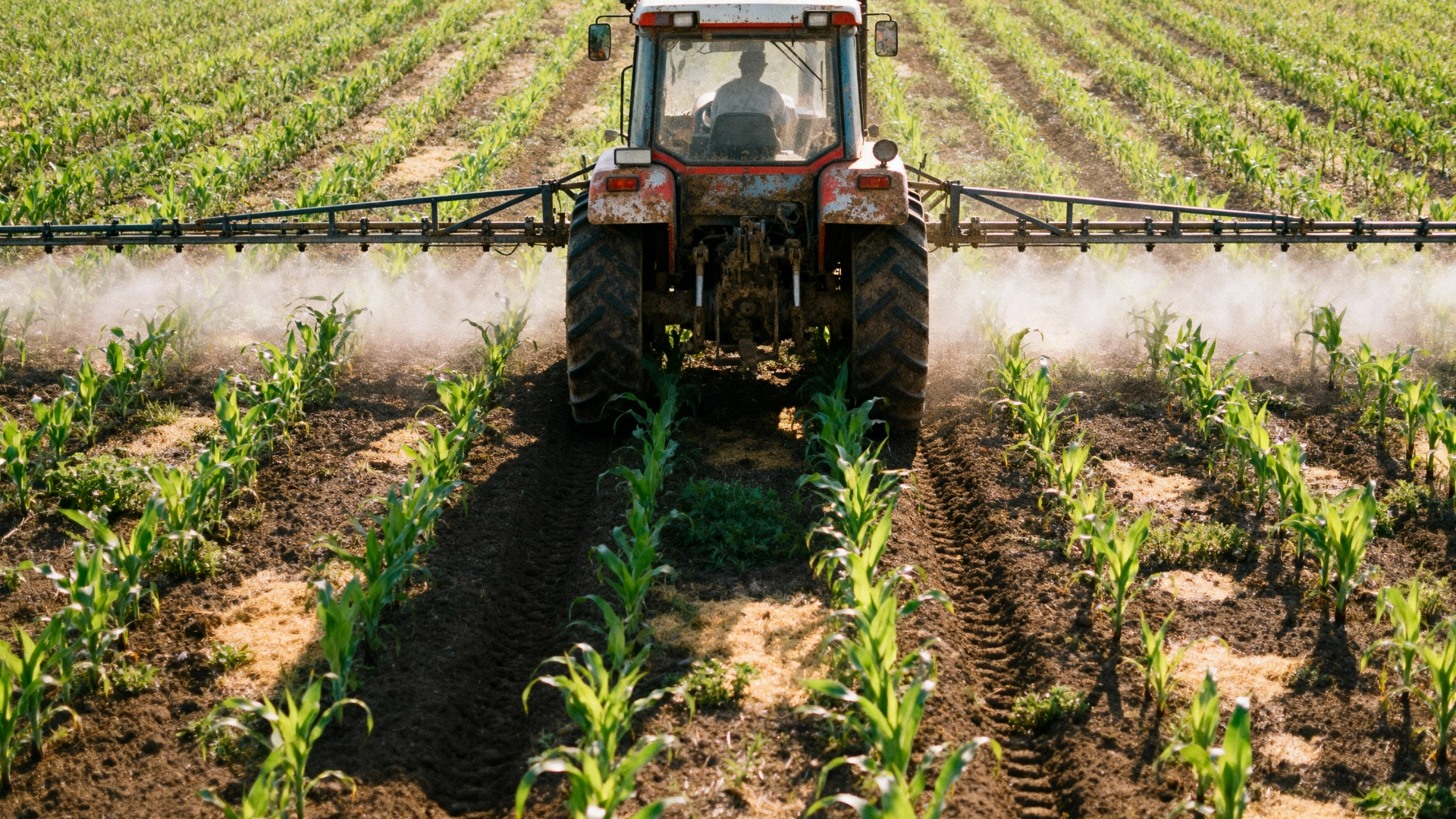
What Are Pesticides and Herbicides?
Pesticides are chemicals designed to kill or control pests. The term covers several categories:
- Herbicides: Weed killers
- Insecticides: Insect killers
- Fungicides: Mold and fungus control
- Rodenticides: Rodent control
When people talk about pesticides in well water, they usually mean herbicides used on crops, lawns, or roadsides. From a testing perspective, what matters is the specific chemical you might be exposed to, not the general category.
Why Pesticides in Well Water Matter
Different pesticides have different health considerations. EPA sets drinking water standards for regulated pesticides based on long-term exposure risks. (EPA)
Most pesticide detections in groundwater are at low concentrations and rarely exceed health-based standards. However, elevated levels can occur in some situations, which is why testing is recommended when risk factors are present.
You often cannot taste or smell pesticides in water. Testing is the only reliable way to know if they are present. (CDC)
How Pesticides Get Into Well Water
Pesticides can reach groundwater through several pathways:
Leaching Through Soil
After application, some pesticides move downward with rain or irrigation water. Areas with high rainfall or sandy soils are more vulnerable.
Runoff and Seepage
Pesticides can wash off fields into streams or ditches, then seep into groundwater through connected systems.
Well Construction Problems
Shallow, older, or poorly sealed wells are at higher risk. Pesticides can travel down abandoned or improperly sealed wells directly into groundwater.
Spills and Improper Disposal
Accidental spills near wells or improper disposal of pesticides can contaminate groundwater directly.
Seasonal Variation
In agricultural areas, pesticide levels in groundwater can vary by season. Detections often peak after spring applications.
When to Test for Pesticides in Well Water
Pesticide testing is not part of routine annual testing for most wells. Consider testing if:
- You live near intensive agriculture: Row crops, orchards, vineyards, or areas with heavy herbicide use (EPA)
- Your well is shallow, older, or poorly sealed: These are higher risk for contamination
- You had a spill, flooding, or land disturbance: Test immediately after significant changes (EPA)
- You are buying or selling a home: Pesticide screening may be part of due diligence in agricultural areas
- Local agencies flag pesticides as a concern: Contact your health department for local recommendations (CDC)
How to Test for Pesticides
Why There Is No Single Pesticide Test
Labs cannot test for "all pesticides" in one sample. There are hundreds of pesticide compounds, each requiring specific analytical methods. Labs use targeted panels based on what is likely in your area.
California's monitoring program, for example, samples for over 200 pesticides and degradates (breakdown products). (CA DPR)
Step 1: Choose a Certified Lab
Use a state-certified laboratory for pesticide testing. CDC recommends certified labs, and your local health department can provide recommendations. (CDC)
Step 2: Select the Right Panel
Ask the lab which pesticide panel fits your situation:
- Near row crops: Request panels for common agricultural herbicides like atrazine
- Near orchards or vineyards: Panels for those crop types may differ
- After a spill: Broader screens including herbicides, insecticides, and possibly VOCs
Step 3: Follow Sampling Instructions
Chemical testing is sensitive to container type, preservatives, and holding time. Use the bottles the lab provides and follow their instructions exactly. Failure to use approved bottles can result in sample rejection. (WI SLOH)
How to Interpret Pesticide Test Results
Reference Standards
EPA publishes Maximum Contaminant Levels (MCLs) for regulated pesticides in public water systems. Private wells are not required to meet these, but they serve as useful benchmarks. (EPA)
Examples (in micrograms per liter, or ppb):
- Atrazine: 3 µg/L
- Simazine: 4 µg/L
- Alachlor: 2 µg/L
- 2,4-D: 70 µg/L
- Glyphosate: 700 µg/L
Degradates Matter
Pesticides break down into degradates (metabolites) in the environment. Some standards and monitoring programs include degradates. Ask the lab if your results include breakdown products. (CA DPR)
Check the Units
Pesticides are typically reported in µg/L (micrograms per liter), ppb (parts per billion), or mg/L (milligrams per liter). Confirm the units before comparing to standards.
What to Do if Pesticides Are Detected
Step 1: Confirm the Result
Check the units and the compound detected. Ask the lab about the detection limit. If the result is close to a standard, consider retesting to confirm.
Step 2: Compare to Reference Values
Use state guidance if available, or EPA MCLs as a reference. Not all detections are cause for concern. Low-level detections are common near agricultural areas but often remain below health-based standards.
Step 3: Reduce Exposure While You Investigate
If your well may be contaminated with harmful chemicals, do not drink the water until you have specific guidance and a safe alternative. (CDC)
Step 4: Address the Source
If contamination is from a nearby spill or a well construction problem, fix the source before relying solely on treatment.
Step 5: Consider Treatment
Point-of-use activated carbon or reverse osmosis can be effective for many organic contaminants. Select treatment based on the specific compound and verify it is rated for pesticide removal.
Prevention and Maintenance Tips
You cannot control what happens on neighboring land, but you can reduce risk at your well:
- Maintain wellhead integrity: Keep the cap secure and seals intact
- Avoid chemical storage near the well: Keep mixing, storage, and disposal away from the wellhead
- Maintain proper setbacks: Follow local guidelines for distance between chemical application and wells
- Test after application seasons: In agricultural areas, groundwater detections can be seasonal
- Keep records: Track test results to spot changes over time
Typical Testing Costs
Pesticide testing typically costs more than basic well safety tests because it requires specialized methods.
Costs vary by lab and panel size. For reference, Wisconsin's state lab lists an atrazine screen at about $68 and broader packages including pesticide screening at several hundred dollars. (WI SLOH)
As a general guide:
- Single-compound screens: Often under $100
- Broad pesticide panels: Several hundred dollars
Contact labs directly for current pricing in your area.
Frequently Asked Questions
Are pesticides in well water common?
Pesticides are commonly detected at low concentrations in groundwater beneath agricultural areas, but they rarely exceed health-based standards. Detection rates vary widely depending on local conditions and chemical use.
Can I taste or smell pesticides in well water?
Usually not. Many pesticides have no noticeable taste or smell at typical concentrations. Testing is the only reliable way to detect them.
When should I test my well for pesticides?
Test if you live near intensive agriculture, have a shallow or older well, experienced flooding or a spill, or if local agencies flag pesticides as a concern in your area.
Why can't labs test for all pesticides at once?
There are hundreds of pesticide compounds, each requiring specific analytical methods. Labs use targeted panels based on what is likely in your area rather than testing for everything.
What is the EPA limit for atrazine in drinking water?
EPA's Maximum Contaminant Level for atrazine is 3 micrograms per liter (3 ppb). This standard applies to public water systems and is commonly used as a reference for private wells.
How do I find a lab that tests for pesticides?
Contact your state health department or use a state-certified drinking water laboratory. CDC recommends certified labs for all private well testing.
Will a carbon filter remove pesticides from well water?
Activated carbon filters can remove many organic contaminants including some pesticides. Effectiveness depends on the specific compound. Look for filters rated for the pesticides you are concerned about.