What Is Radon?
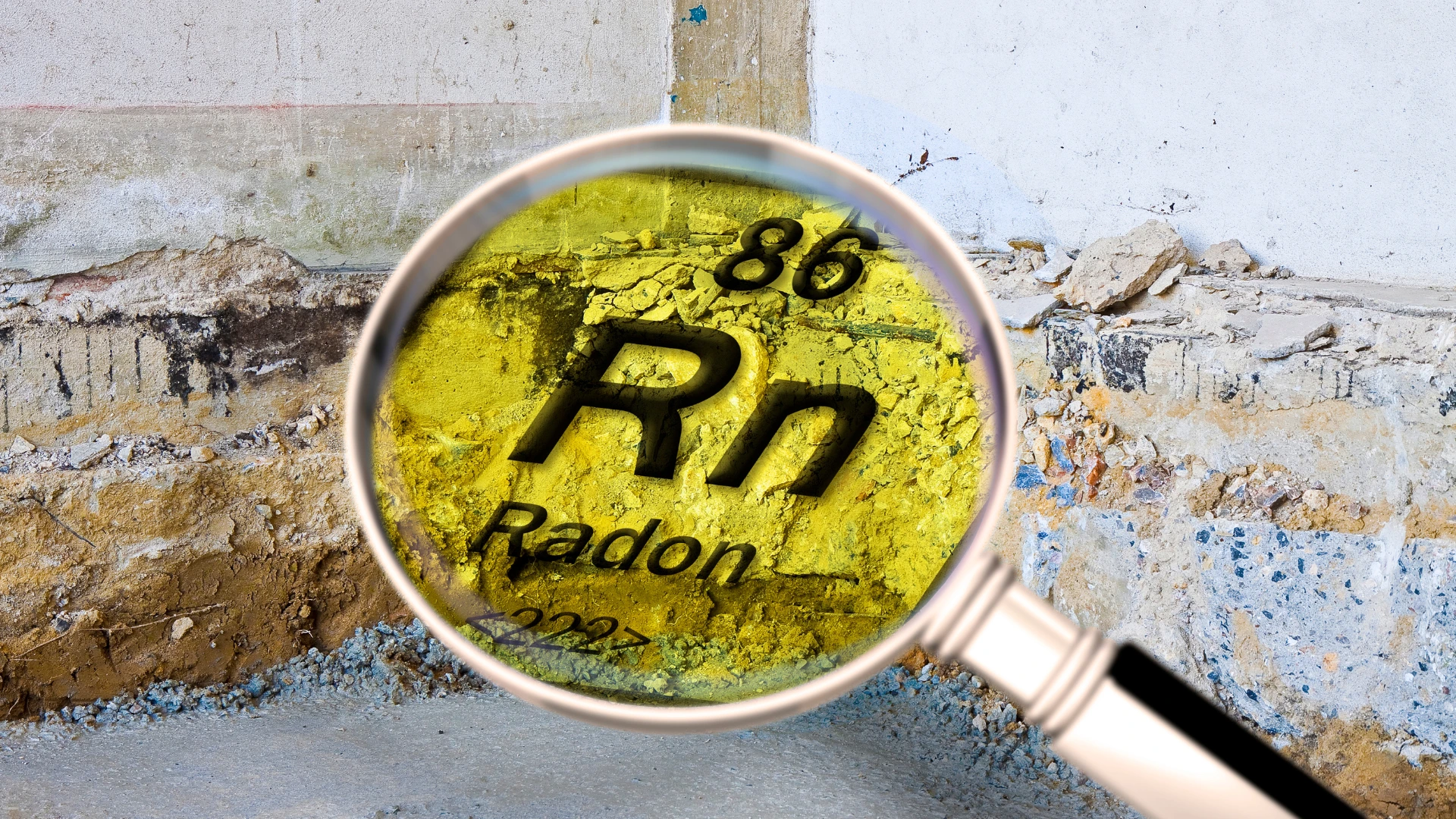
Radon is a naturally occurring radioactive gas. It forms when uranium and radium in rock and soil break down. Radon has no color, taste, or smell.
Radon can enter homes through foundation cracks and gaps (the main source for most homes) and can also dissolve into groundwater. Private wells draw from groundwater, so some wells contain measurable radon. (WI DNR)
The likelihood of elevated radon in a well depends on local geology. Some regions have higher natural uranium content, which leads to more radon in both soil and groundwater.
Why Radon Matters
Radon exposure is a leading cause of lung cancer. ATSDR describes it as the second leading cause of lung cancer after smoking in the United States. (ATSDR)
The main risk comes from inhaling radon gas, not from drinking water containing radon. When you use water from a well with dissolved radon, some of that radon escapes into the air in your home. Activities like showering, running faucets, and washing dishes release radon from the water.
However, for most homes, radon entering through the foundation is a much larger contributor than radon from water. EPA estimates that only about 1 to 2 percent of indoor radon comes from drinking water. (EPA)
Where Radon in Well Water Comes From
Radon in well water comes from natural radioactive decay of uranium in underground rock. As radon forms, it dissolves into groundwater moving through those rocks.
Radon levels in wells depend on:
- Local geology: Areas with granite and certain other rock types often have higher radon
- Aquifer characteristics: Groundwater in contact with uranium-bearing rock picks up more radon
- Well depth and location: Even nearby wells can have different levels
Public water systems often have treatment and distribution processes that reduce dissolved gases. Private wells do not have these steps, and EPA does not regulate private wells. (Raritan Headwaters)
When to Test for Radon in Well Water
Step 1: Test Indoor Air First
Multiple agencies recommend testing household air before testing water. Wisconsin DNR says: "Test your household air for radon first." (WI DNR)
EPA recommends fixing the home at 4 pCi/L or higher, and considering fixes between 2 and 4 pCi/L. (EPA)
Step 2: Test Water if Air Is Elevated
If you have a private well and indoor air exceeds 4 pCi/L, test your well water for radon. This helps determine whether water is contributing to indoor air radon. (WI DNR)
Other Reasons to Test Well Water
- You live in an area with known radon-prone geology
- You are installing or evaluating radon air mitigation and want to understand all sources
- You are buying a home with a private well in a radon-prone region
How to Test for Radon in Well Water
Radon water testing requires careful sampling because radon gas can escape from the water into the air.
Use a Certified Lab
Contact your state health department or environmental agency for a list of labs that test for radon in water. Labs typically provide sampling kits with instructions. (CDC)
Sampling Tips
- Avoid bubbles: Bubbles allow radon to escape, giving a false low result
- Flush the tap first: Some protocols require extended flushing before sampling
- Fill slowly: Reduce flow to prevent turbulence
- Cap tightly: Check for visible bubbles and resample if needed
- Ship immediately: Labs typically need samples within 24 to 48 hours
Connecticut's protocol specifies counting must begin within 4 days of collection. (CT DPH)
How to Interpret Radon Water Results
Units
Radon in water and air are reported in pCi/L (picocuries per liter). (WI DNR)
The 10,000 to 1 Rule of Thumb
A common estimate is that 10,000 pCi/L of radon in water adds about 1 pCi/L to indoor air. (NC DHHS)
This helps you estimate how much your well water might contribute to indoor air radon.
State Program Guidance
North Carolina offers this interpretation: (NC DHHS)
- 10,000 pCi/L or higher: Consider water treatment along with air mitigation
- 4,000 to 10,000 pCi/L: Water treatment is optional
These are state-level recommendations, not federal standards for private wells.
What to Do About Radon in Well Water
Step 1: Mitigate Indoor Air First
Since most radon comes from soil gas, addressing air radon usually gives the biggest reduction in exposure. EPA emphasizes indoor air mitigation as the primary step. (EPA)
Step 2: Consider Water Treatment if Levels Are High
If your well water radon is above 10,000 pCi/L and indoor air remains elevated after air mitigation, water treatment may help. (NC DHHS)
Common treatment options:
- Aeration: Mixes water with air in a tank and vents radon outside. Often preferred for higher levels because it does not accumulate radioactivity.
- Granular activated carbon (GAC): Adsorbs radon from water. Works for lower levels, but radon accumulates in the carbon, which can create a radiation source near the unit. (UMass)
Step 3: Retest After Treatment
After installing air or water mitigation, retest to confirm levels have decreased.
Prevention and Maintenance Tips
You cannot prevent radon from occurring naturally, but you can manage exposure:
- Test indoor air every few years, even if previous tests were low
- Maintain air mitigation systems according to manufacturer instructions
- Retest after major home changes that could affect air flow (additions, sealing, HVAC changes)
- If you install water treatment, maintain it properly and retest periodically
- Ensure proper ventilation in areas where water is used heavily (bathrooms, laundry)
Frequently Asked Questions
Is radon in well water dangerous?
Radon in well water can contribute to indoor air radon, which is a known lung cancer risk. However, most indoor radon comes from soil gas, not water. Water testing is most relevant when indoor air radon is already elevated.
Should I test my well water or indoor air for radon first?
Test indoor air first. Most exposure comes from air, not water. If indoor air is elevated and you have a private well, then test the water to see if it is contributing.
What level of radon in well water is safe?
There is no enforceable federal standard for radon in private well water. State programs often suggest considering treatment above 10,000 pCi/L. The main goal is keeping indoor air radon low.
How does radon get from water into indoor air?
Radon escapes from water when water is agitated or aerated. Showering, running faucets, and doing laundry release dissolved radon into the air you breathe.
Can I remove radon from well water with a filter?
Standard carbon filters are not typically designed for radon. Specialized treatments like aeration or GAC systems designed for radon removal are needed. Point-of-use filters under a single sink do not adequately address radon released throughout the home.
How often should I test for radon in well water?
If you tested once and levels were low, you may not need to retest regularly. Retest if you install treatment to verify it is working, or if indoor air radon increases unexpectedly.
Does boiling water remove radon?
Boiling can release radon from water, but this is not a practical treatment method. It would release radon into your kitchen air rather than removing it from your home.